Studying abroad project

Many of us dream (or have done so) about studying somewhere that is else – experiencing a different country, culture and climate while getting a degree at the same time.

Having spent time abroad can also look good on your resume when applying for future jobs, it might say something about your ability to adapt to new settings, to working in a language not your own, and your sense of adventure.

person holding terrestrial globe scale model taken
Photo by Artem Bali on Pexels.com

During the month of September, you will plan your year of studying abroad, and then present this plan orally. Here’s what you need to do:

First you need to find out what you want to study and where. Remember that you must choose an English-speaking country. You can take this test https://www.educations.com/career-test if you need inspiration for what to study. 

Find a real university that offer this study program and find out what you need to do to apply there. Grades, college interview, personal statement, recommendations from teachers??? How much does it cost to study there?  Do you need some sort of student visa – how do you get that? http://www.ansa.no/ is a website that offers a lot of information about these sort of things.

What kind of student activities do this town offer? What do you want to do in your spare time? Plan this too. 

Where will you live? Find a place – look at actual listings for apartments or student dorms in your chosen city.  https://www.goabroad.com/articles/study-abroad/best-student-accommodation-websites

What about the culture in this country – are there rules of behavior you need to adapt to? Communications, festivals, food, religions…

Make a prezi, a power point or a video where you present your study plans. This will be graded orally.

There is no required LENGTH – I know how much you love to ask about that, but if you want a good grade you should make sure that you answer all the assignment asks of you.

Useful websites:

https://no.studyacrossthepond.com/anbefalingsbrev/bachelor/referent

https://www.kilroy.no/utdanning?gclid=Cj0KCQiA1sriBRD-ARIsABYdwwGEG6rwwsYu2JfK9jQxoTZn17I-WDqhStgQxKx8udcQs5gnCyf2qu4aAmZ7EALw_wcB

https://capaworld.capa.org/5-sites-to-prepare-you-for-study-abroad

https://www.goabroad.com/articles/study-abroad/best-student-accommodation-websites

More information can be found on the assignment paper on Teams.
  • adult book business cactus

Photo by rawpixel.com on Pexels.com

  • Ingunn/Hanna

The Conflict in Sudan

Having watched “The Good Lie” you have gotten some insight into the longlasting conflict in Sudan and some of its consequences.

In your groups, do more research on this and present your findings in a poster.

This poster should include the following:

  • what is the conflict about?
  • how has the conflict happened/developed?
  • Who are “The Lost Boys” and what made them become “lost boys?”
  • Do we know anything about where “the lost boys” are now?
  • What is the situation for Sudan and South Sudan today?

Hanna

The Good Lie

You have now seen the film “The Good Lie” (2014), about four Sudanese refugees starting life in the US. Write a blog post, where you include the following:

  • what can be possible challenges of living in a foreign culture?
  • what role can intercultural communication play?

Use examples from the film to emphasize the points you make. Publish your post by Monday Sept. 11th.

In the News: Lost for Words

Global issues include all social, environmental, economic, health and security concerns that have far-reaching impact on people and life on earth, are persistent and long-lasting, are trans-national and often interconnected. Yet somehow we are often blind to how all-encompassing this can be. Then it is a good thing that we have dedicated journalists and open-minded editors that allow a variety of stories and perspectives to be published that we ourselves have a hard time realizing the enormity of.

The Guardian published an article today in which they focus on a consequence of climate change that we do not often think about. Read about it here.

Guest Speakers

Write a blog post where you comment on the value of having visitors join our class and talk about different subjects, such as you have experinced this spring either via Zoom (refugee Kawthar Sheheda from Syria/psychologist Solfrid Raknes in Washington D.C.) or live (Fulbright Roving Scholar Renee Brekke Ebbot, who talked to about such diverse topics as water and identity). 

What can we learn from such visits that is different than regular learning in the classroom? Would you like the school to invite more guest speakers, and do you have any thoughts on how the learning experience in different school subjects can be broadened and perceived as relevant by the students?

Ingunn

Just Do It?

Look at this video from Nike: https://www.youtube.com/watch?v=drcO2V2m7lw

  1. What is NIKE’s slogan? 
  2. How has the slogan been tweaked in the title of this video?
  3. Who is the intended audience of the video?
  4. What effect does this video have on you?
  5. Explore the hashtag #UntilWeAllWin online. What is it about?

Then watch this video, also from Nike:https://www.youtube.com/watch?v=lomlpJREDzw

6. Towards, the end of the video, Colin Kaepernick says: “Don’t ask if your dreams are crazy. Ask if they are crazy enough”. What do you think he means and how is this shown through the video?

7. Then the NIKE symbol and slogan come up – what is the effect of this?

8. Finally, discuss the role sports and sports companies can play in fighting for a more equal world.

Working with the film Babel

Babel (2006)

We talk about the border as a place only, instead of an idea. I believe that the real borders are the ones that exist within us.

Alejandro González Iñárritu, director of Babel

Discussion questions to the film:

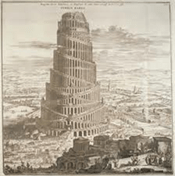
  1. What does the Biblical story of Babel in chapter 11 of Genesis illustrate?
  2. In which countries does this film take place?
  3. What languages are spoken by the main persons?
  4. Where do you find acute misunderstandings between persons?
  5. Give a short summary of the plot and the main conflicts in the film.
  6. How well do the actors portray the main characters, do you think??
  7. Which scenes do you think are the most important ones?
  8. Is the story chronological? Are there any flashbacks and/or flash forwards?
  9. What techniques are used to tell the story? (sound-color-camera use)
  10. It is claimed that this film is filled with emotions that need no translation. They are universal. Give examples of this.
  11.  Does the film have a clear message, or does it leave room for different solutions?
  12. Your personal evaluation of the film. Give reasons for your view.
  13. To whom would you recommend the film “Babel”?

After having watched the film, write a blog post on one of the following tasks:

  1. The title and the actions in the film strongly indicate that communication and lack of communication, or rather breakdown of communication is a main theme. Discuss and explain how this is reflected in the film.
  2. Another theme related to this might be intercultural communication and challenges represented by globalization. Why is it so difficult to reach out to each other across cultures? Discuss and explain by referring to the film. You may focus on:

    Japanese vs. Western culture
    Mexican vs. American culture
    American vs. Arab culture
  3. Yet another theme related to communication might be loneliness. How is this reflected in the film? Give examples and explain.

Ingunn

NB! Postponed because of home school – see itslearning for link and task to the film Desert Flower instead.

Climate changes affect indigenous cultures

Watch this 15-minute video produced by the Guardian and read this article from the same news source detailing how some indigenous peoples experience changes to their culture due to effects of climate changes.

What challenges and benefits do the people on Greenland experience because of climate changes? And while Aboriginal Australians may have the same core problem, given their vastly different physiography the effects are even more devastating. Add governmental obstructions, for instance when it comes to infrastructure, into the equation, and it is hard to see any benefits from climate changes like the Greenlanders do. So what challenges do the people of Australia’s Northern Territory face because of climate changes?

Hilde

Sources:

My Son the Fanatic and Free for all

“My Son the Fanatic” is a short story written in 1997 by Hanif Kureishi about a father and a son living in London, and struggling to adapt. The father left Pakistan and loves England, he wants to become as English as possible, because “you can do almost anything here.” The son has never been outside England, but still struggles to find his place in the English society, and is looking for something else, going back to the culture and faith of his ancestors, and becoming more and more angry with the society he sees around himself – the society his father is so in love with.

“Free for All” is a short story written by Moin Ashraf in 1999. This story too depicts a father and a son, this time in the US, the father doing everything “right” to become an upright and successful man in his new country, and being frustrated at seeing his son leaving the ideals of his own country and tradition. It is a culture clash, between a son who has grown up American, and a father who still looks back to and values of his Pakistani homeland.

Write a blog post where you EITHER compare these two stories in terms of father-son relationships and the question of identity and belonging, OR discuss what these two stories say about being an immigrant, and raising a family in a different culture. What are these two stories saying about multiculturalism?

Hanna

Two immigrant voices

Comedians Trevor Noah and Hasan Minhaj use their own experiences and background in their stand-up shows «Homecoming King» and «Son of Patricia».

Write a blog post in which you discuss how they use examples from their own lives to illustrate their experience as immigrants in the USA.

Choose one or two of the sub topics they include in their shows and comment on the questions below:

Do you think other immigrants can recognise the challenges the two talk about being an immigrant or part of an immigrant family? Why? Why not?

Can we learn something about being an immigrant watching these shows? Explain.

Elin and Hanna