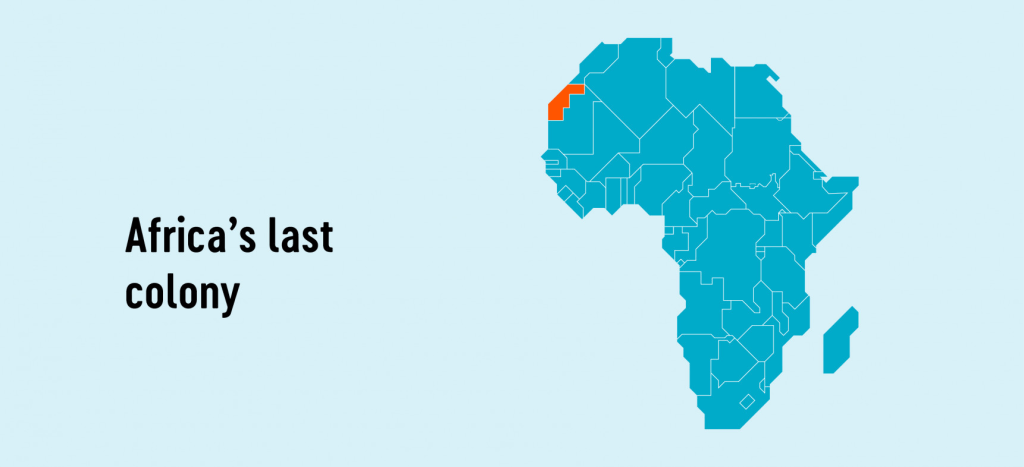
Western Sahara is often called Africa’s last colony and also a forgotten conflict. On March 18th we had a visitor in class, Asria Taleb, from the Norwegian Support Committee for Western Sahara, who talked about the Morroccan occupation, life in Algerian refugee camps, the part of the UN in this conflict, and the media coverage.
Write a blog post about what you learned about this conflict and activism to support the Sahrawi people in their struggle for independence. Had you heard about the conflict before? If yes, what and where? If no, why do you think that is? Comment on the lack of media attention for this conflict and see if you can find any newspapers reporting anything about Western Sahara – if so – what?
Durig the last few weeks the war in Ukraine has been all over the news – rightfully so… but what is getting lost when so much focus is on this conflict? Here a couple of items I don’t think we should miss out on:
One of very few women ever to lead a national football organization, Norwegian Lise Klaveness spoke to the FIFA Congress in Quatar last week about human rights violations. She talked about the importance of helping migrant workers in Qatar, do more to protect LGBTQ+ supporters at the World Cup, and more in general to make the global game welcoming to all. According to The Guardian, 6500 migrant workers have died in Quatar since they were awarded the World Cup in 2010. In the past 10 years, Qatar has put in place a massive building program, preparing for the football tournament in 2022. In addition to seven new stadiums, dozens of major projects have been completed or are under way, including a new airport, roads, public transport systems, hotels as well as a new city, which will host the coming World Cup final.
See the full speech below:
Another important news item regarding human rights violations came, not unexpectedly, from Taliban-ruled Afghanistan. “Following a U-turn over re-opening girls’ secondary schools in Afghanistan on Wednesday, the UN human rights chief shared her “profound frustration and disappointment” that six months after the Taliban seized power, high school girls have yet to return to the classroom.” Read the UN report here:
“Millions of secondary-school girls around Afghanistan woke up hopeful today that they will be able to go back to school and resume their learning. It did not take long for their hopes to be shattered.” statement by @unicefchief
Tension has been increasing on the Russia-Ukraine border. Today it has been reported that Russia is pulling back some of its soldiers back: https://www.bbc.com/news/live/world-60372815
Take a look at this and the news report below to understand more about the background for the conflict. Then write a blog post where you summarize what you have learned.
After having watched the two videos above, write a blog post where you summarize the content briefly. Then explore one of these issues – the most urgent and/or interesting one to you – and explain why you think so.
Study the two news stories below to find out more about the situation for women and girls in Afghanistan now that the Taliban is back in power.
Discuss: what do the two stories tell you about the situation for females in Afghanistan, past and present? What do girls and women have to face should they want to study? Do these stories make you more pessimistic or more optimistic on the behalf of Afghanistan’s future? Why?
The Taliban is in power again in Afghanistan, 20 years after 9-11 and the following invasion of Afghanistan. The USA have decided to pull out all their remaining troops by August this year, leading to total chaos and heart-breaking scenes at the airport in Kabul, with local Afghans trying to board planes to get out of a Taliban-ruled Afghanistan. US President Joe Biden has stated that the withdrawal will be completed and that the main concern for him is getting American troops home safely.
So what is the problem? Should we care about the development in Afghanistan? Is it an international responsibility to “clean up” after the mess we have left and to ensure a democratic development in Afghanistan? Or should we just leave them alone and hope that human rights will be respected and democracy thrive? (not very likely….)
Using the sources below, discuss these questions in your groups. Choose a secretary who writes down the main points of your answers and discussion. Also, discuss the reliability of these sources and how they differ in language and style.
Western Sahara is often called Africa’s last colony and also a forgotten conflict. On March 3, you were so lucky to have a visitor via Zoom – Asria Mohamed. She works for The Norwegian Support Committee for Western Sahara, and talked about the Morroccan occupation, life in Algerian refugee camps, and the part of the UN in this conflict.
Write a blog post about what you learned about this conflict and activism to support the Sahrawi people in their struggle for independence. Comment on the lack of media attention for this conflict and find out why the media wrote about in again in November/December 2020.
Asria said in the meeting that she feels she has no choice when it comes to her activism for the Sahrawi people – what do you think she meant by that?
Hope you enjoyed the visit – Asria is an excellent speaker and a brilliant woman.
This year’s OD Project support young refugees from South Sudan. Visit this site: https://www.od.no/pushgrensene to learn more about the project. What do you learn about the country South Sudan and the challenges people are faced with there? Why have many people fled to the neighbour country, Uganda? What are some of the problems they are faced with there? What is the OD Project going to help with?
Write a blog post where you argue why Norwegian students should take part in this year’s OD Project.
During the last few weeks, protests against police violence and the treatment of certain groups have developed in Nigeria. Find out more here: https://www.bbc.com/news/world-africa-54666368
Social media has played a big role in the protests and spreading information. However, there have also been fake or false news stories circulating: https://www.bbc.com/news/world-africa-54628292
What do you think about social media’s role in spreading awareness about such issues and protests, and in what ways can it be damaging when false accounts of such protests are spread in the media?
What does this cartoon tell you about the government’s response to the protests?



 English 1