September elections

September 2021 has been a month of many elections around the world, amongst them general elections in Canada, Germany, Iceland, Russia and Norway. Write a blog post to publish on your own blog in which you cover who won in these elections and by how much, as well as comparing voter turn-out. In addition, research whether there has been media coverage on election irregularities in any of these elections.

Consider and discuss your sources in all aspects of this task.

Hilde

Human Rights and the UN

The United Nations was founded in 1945, to maintain international peace and security, develop friendly relations among nations and promote social progress, better living standards and human rights. In 1948, the United Nations passed the Universal Declaration of Human Rights.

Watch this video:

and then look at the complete declaration here: https://www.un.org/en/about-us/universal-declaration-of-human-rights

Discuss in your groups: Which articles do you find the most important or interesting? Are there rights which should be added, do you think? Which one(s) do you think are most often violated? Which ones have you come across being violated in the class work we have done so far?

Then read one of the stories on the violation of human rights here: https://news.un.org/en/news/topic/human-rights

Write a blog post where you answer the following questions:

  • What universal right(s) is/are being violated?
  • How does this affect the population?

Publish the post on your blog by the end of class on Thursday.

Ingunn

The International Day of Democracy

In 2007, the United Nations General Assembly declared 15 September the International Day of Democracy, providing us with “an opportunity to review the state of democracy in the world” and arguing that “democracy is as much a process as a goal” (UN). In many countries we can see a deterioration of conditions for democracies, through various forces both internal and external. This has become more noticeable during the ongoing pandemic, but it started long before, which is also indicated by instituting such a day 14 years ago.

Study some of the maps on the Secretary General’s policy brief from April 2020 – in particular the two on school closures and stringency of government containment measures. Also read the concerns and suggested countermeasures on the UN Democracy Day’s website and prepare for a discussion of what threatens a democracy and how we can strengthen it.

Also read the New York Times Learning Network’s editors Schulten and Engle’s introduction to the late Congressman John Lewis’ essay “Together, You Can Redeem the Soul of Our Nation”. Check out thoughts and responses on the hashtag #DemocracyDay and reflect on Schulten and Engle’s questions posed after Lewis’ essay, as published on the New York Times Learning Network exactly a year ago.  

The late civil rights activist and Congressman John Lewis argued that “[d]emocracy is not a state. It is an act”. Compare this with UN’s claim that democracy is both a process and a goal. What is democracy to you?


In the news: The situation for women and girls in Afghanistan

Study the two news stories below to find out more about the situation for women and girls in Afghanistan now that the Taliban is back in power.

Discuss: what do the two stories tell you about the situation for females in Afghanistan, past and present? What do girls and women have to face should they want to study? Do these stories make you more pessimistic or more optimistic on the behalf of Afghanistan’s future? Why?

https://edition.cnn.com/2021/09/07/asia/afghan-university-male-female-segregation-curtain-intl/index.html

Students attend class at Avicenna University in Kabul, Afghanistan, on September 6, 2021, in this picture obtained by Reuters from social media.

In the news: What’s going on in Afghanistan?

The Taliban is in power again in Afghanistan, 20 years after 9-11 and the following invasion of Afghanistan. The USA have decided to pull out all their remaining troops by August this year, leading to total chaos and heart-breaking scenes at the airport in Kabul, with local Afghans trying to board planes to get out of a Taliban-ruled Afghanistan. US President Joe Biden has stated that the withdrawal will be completed and that the main concern for him is getting American troops home safely.

So what is the problem? Should we care about the development in Afghanistan? Is it an international responsibility to “clean up” after the mess we have left and to ensure a democratic development in Afghanistan? Or should we just leave them alone and hope that human rights will be respected and democracy thrive? (not very likely….)

Using the sources below, discuss these questions in your groups. Choose a secretary who writes down the main points of your answers and discussion. Also, discuss the reliability of these sources and how they differ in language and style.

Who are the Taliban:

https://www.bbc.com/news/world-south-asia-11451718

Timeline of the history of Afghanistan:

https://www.pbs.org/newshour/politics/asia-jan-june11-timeline-afghanistan

(excerpts in class)

Democracy under attack

Have you heard about the military coup in Myanmar? Read more about that here

Yesterday, the second impeachment trial again former President Trump started. This video was made by the managers of his trial in the US Senate: https://www.youtube.com/watch?v=i9Xd5s0boWc

“Democracy was dealt a major blow in 2020. Almost 70% of countries covered by The Economist Intelligence Unit’s Democracy Index recorded a decline in their overall score, as country after country locked down to protect lives from a novel coronavirus. The global average score fell to its lowest level since the index began in 2006.” (Economist Intelligence Unit, https://www.eiu.com/n/campaigns/democracy-index-2020/)

The Economist Intelligence Unit Democracy Index map for 2020

The USA falls under the category of “flawed democracies”. Read more about that here: https://sites.uci.edu/energyobserver/2020/02/04/the-us-and-key-countries-in-the-democracy-index-2019/

Discuss in your groups:

  • What impressions are you left with regarding democracy development after working with these sources?
  • Are you optimistic or pessimistic regarding the future of democracy?

Death to 2020 – working with a mockumentary

Discussion questions after watching this film on Netflix:

  • Say something about (some of) these characters from the movie. How did they strike you? What kind of “stereotypical persons” are some of them portrayed as? In what ways do you think the filmmakers used humor/irony with them?
  • How did the movie present US politics and the presidential election? Do you think the movie chose a side? Discuss how the movie portrayed this.
  • How did the movie portray fake news and how they spread?
  • Was it difficult to separate irony from facts in this mockumentary? Give examples from the film.

Ingunn

Snowden and Assange – Heroes or Criminals?

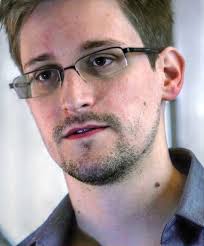
Edward Snowden – Wikipedia
Edward Snowden

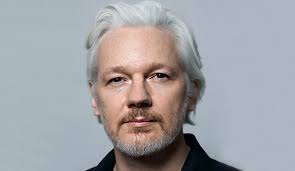
Norsk PEN til stede under rettssaken mot Julian Assange - Norsk PEN
Julian Assange


What do these men have in common?

Julian Assange is the head of WikiLeaks and faces a harsh prison sentence in the USA if he were to be extradited from Britain. He released over 750,000 documents which showed corruption and human rights abuse at the hands of the American government in Iraq and Afghanistan, as well as at the prison camp on Guantánamo. The documents were given to him by private Chelsea Manning, who was arrested in 2010 and served 7 years in prison. Just yesterday, a British court decided against extraditing Assange, on the grounds of his mental health.
Edward Snowden is a former contractor for the National Security Agency who in 2013 transmitted to journalists 1.7 million classified documents detailing NSA online surveillance of American citizens. He was charged under the Espionage Act, but gained asylum in Russia.

So, are these people heroes or criminals? How crucial is it for a democracy to have whistleblowers? And where is the line between warning the public and exposing wrongs on the one side and breaking the law and putting your country at risk on the other? What is more important, freedom of speech and the right to privacy, or loyalty to your employer and country? And what costs does this come with for the individual who has to make that choice?

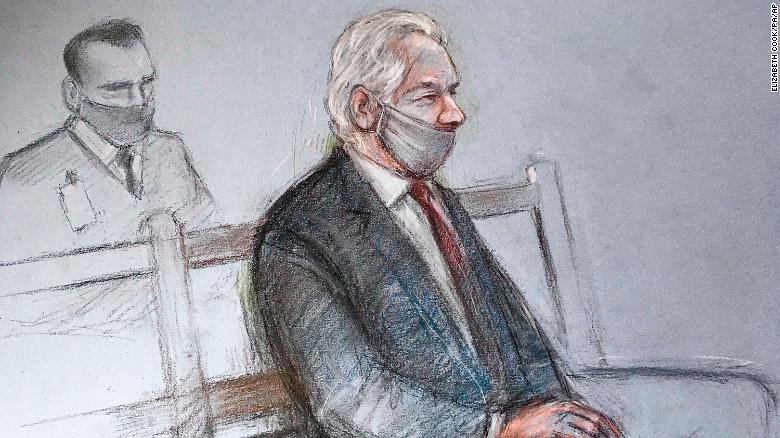
A court sketch of Julian Assange at the Old Bailey in London for the ruling in his extradition case on Monday, January 4, 2021.

A court sketch of Julian Assange at the Old Bailey in London for the ruling in his extradition case on Monday, January 4, 2021.

https://edition.cnn.com/2021/01/04/uk/julian-assange-extradition-wikileaks-us-gbr-intl/index.html

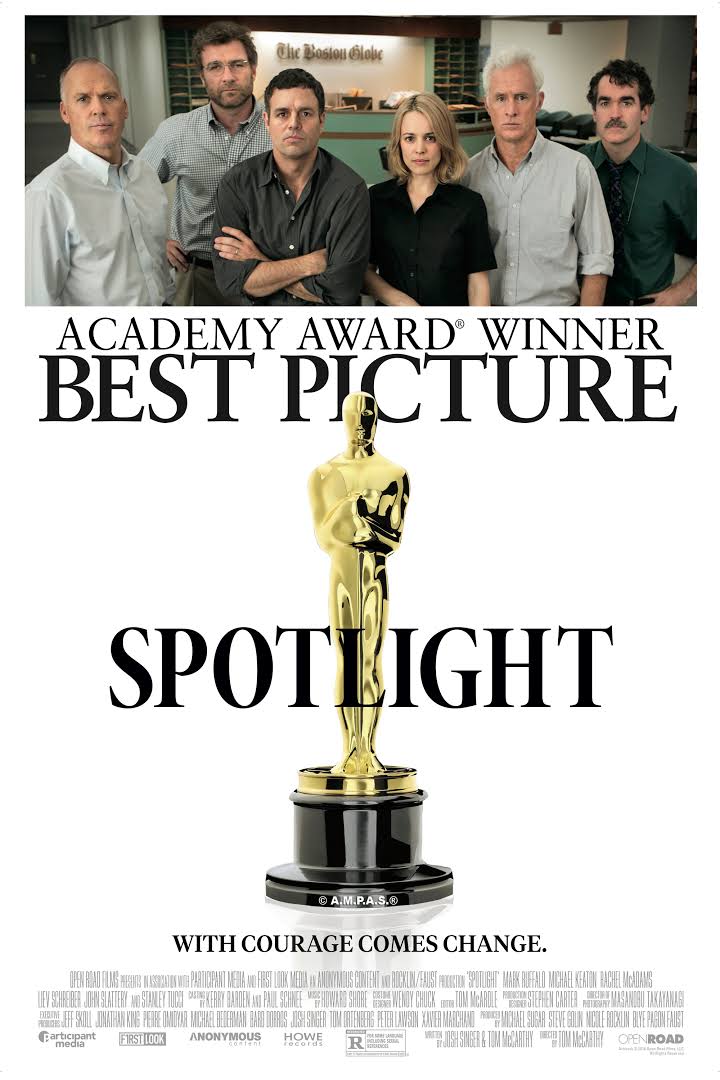
Spotlight

spotlight

(Picture from http://t0.gstatic.com/images?q=tbn:ANd9GcS8FoV_CqN1-EetgwddDzbfaFYsOlAufiupBdzDTGLm6l8ty-F1)

“Spotlight” is a film dealing with real events, and how investigative journalism lead to reveal several crimes committed by members of the Catholic Church.

Investigative journalism is an important part of the media – it takes time and serious effort to do research and to find out the truth about a topic. It can be expensive, and therefore many do not make it a priority. But the work and the findings are important for the freedoms and protection of freedoms in our society. Read more about investigative journalism here.

Choose two of the questions on the film study work sheet (if you have lost it you can find it on It’s Learning under Resources) and write a blog post where you discuss your answer to these questions.

At the end of the post, sum up briefly what you learnt from this film, and how you liked it.

IF YOU DID NOT GET TO WATCH THE WHOLE FILM: write a blog post about the importance of investigative journalism, using what you can read here about Watergate as examples to prove your point.

Hanna

One story, many truths?

How has president Trump met the Covid-19 pandemic? Fox reports that his vice president could not have been more proud, Alternet repeats allegations of him being a mass murderer, while the New York Times asks questions. How can the same issue cause so different “truths?” And what is true?

Keeping the five C’s in mind (context, credibility, corroboration, construction and compare) – visit the three links above and read/watch how the different news outlets respond to how Trump has handled the pandemic.

Then, use the post-its you have been given to answer the questions below. One post it per answer, and then put up your post its around the classroom.

  1. how do the different articles portray Trump’s reaction to the pandemic?
  2. What adjectives/loaded words are used in the different articles?
  3. Can you tell which article is more liberal and which is more conservative? How
  4. Which of the articles were easiest to read? Why?
  5. Which of the articles do you find most believable? Why?
  • Hanna